Hi Vis Vest Colors: Lime vs Orange and When to Use Each
If you manage a road crew, a warehouse floor, or a weekend event, choosing between lime and orange is more than a style call. Both hi vis vest colors are recognized under the ANSI/ISEA 107 standard for high-visibility apparel, but the two backgrounds perform differently depending on what a worker is standing in front of. Pick the color that suits the environment and a crew member is spotted from a typical estimated 300 to 500 feet away in daylight; pick the wrong one and the same vest can blend into the surroundings it was supposed to stand out from. This guide breaks down when lime wins, when orange wins, and how most safety programs end up stocking both.
Why Both Colors Are ANSI 107 Compliant
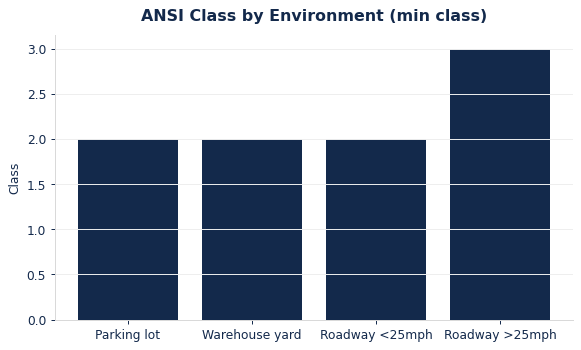
Fluorescent yellow-green, generally called lime, and fluorescent orange-red are the two background colors approved under ANSI/ISEA 107. The class rating on a vest, whether Class 2 or Class 3, is about the amount and placement of background material and reflective tape, not the color itself. That means a compliance officer checking a job site is not looking for one specific hue; they are checking that the garment meets the fluorescence and reflective-tape requirements for the class the job calls for. Color choice is left to the employer, and the smartest programs treat that as a genuine design decision rather than a coin flip.
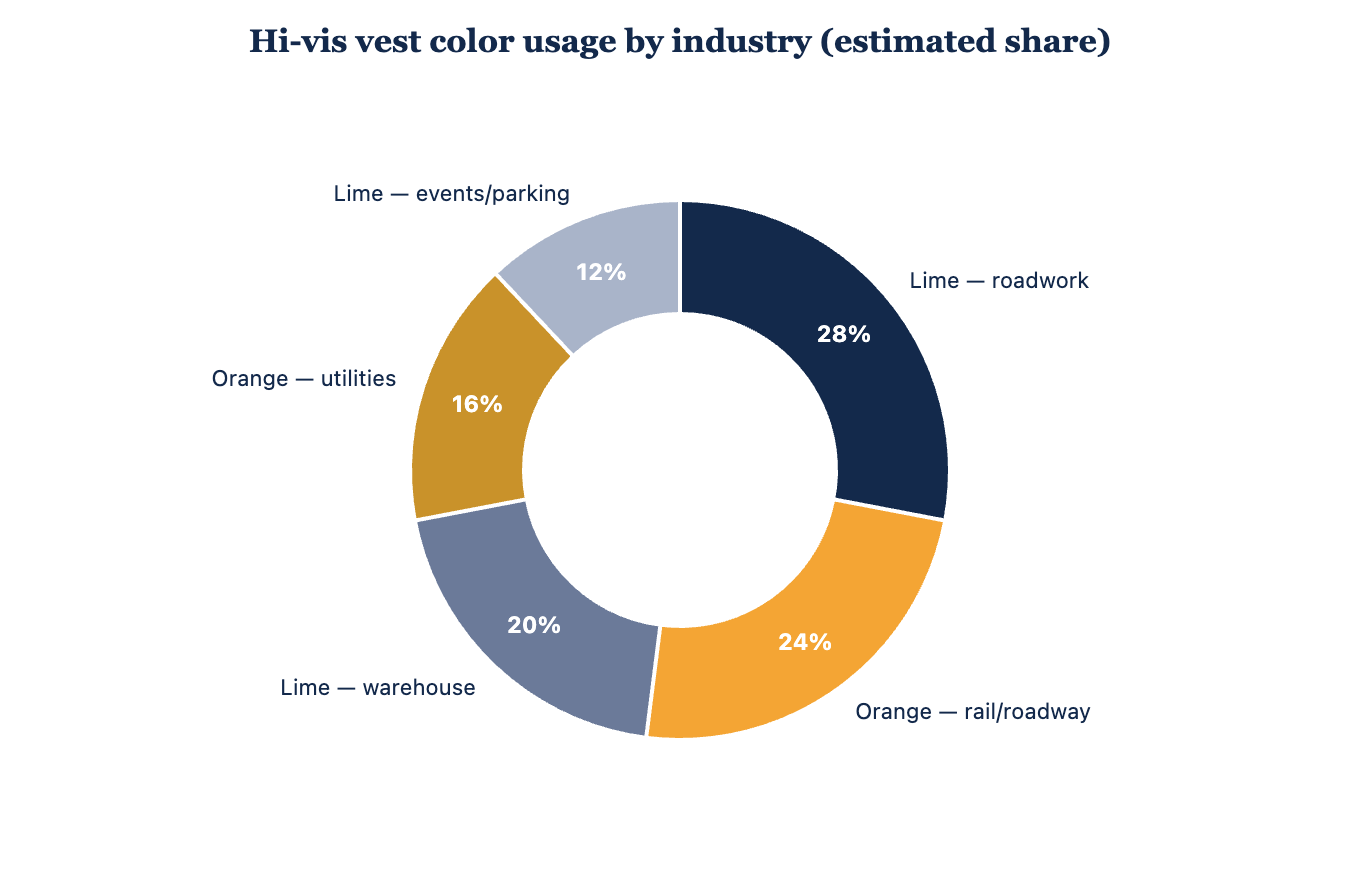
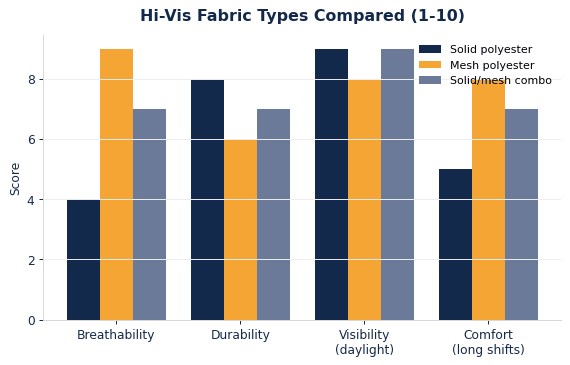
As the chart above shows, roadwork crews and warehouse operations lean toward lime, while rail, roadway, and utility crews lean toward orange. Events and parking operations tend to split, often based on what looks best against the venue’s own signage and lighting rather than a strict safety requirement.
Where Lime Vest Colors Win
Green Backdrops and Daylight Landscaping
Lime performs best against green foliage, mowed grass, and the muted gray of pavement and concrete. The fluorescent yellow-green pigment sits at a wavelength the human eye picks up quickly in daylight, and it contrasts sharply against natural greenery in a way orange simply cannot match. Landscaping crews, utility line workers near tree cover, and warehouse staff working around gray racking and concrete floors typically get better daytime contrast from lime.
Indoor and Mixed-Light Warehouses
Inside a warehouse, lighting is usually fluorescent or LED overhead rather than natural daylight, and lime’s brightness tends to hold up well under those artificial sources. Combined with forklifts and pedestrian walkways painted in neutral tones, a lime vest reads as an obvious outlier on the floor, which is exactly the point of a hi-vis garment in a facility with mixed foot and vehicle traffic.
Where Orange Vest Colors Win
Snow, Winter Roadways, and Rail Corridors
Orange takes over as the stronger performer once the background shifts to snow, ice, or the gray-white haze of a winter roadway. Lime can wash out against bright snow cover, while orange holds its contrast because it sits farther from white on the color spectrum. This is a major reason snow-belt DOT crews, plow operators, and many rail maintenance programs specify orange as their default hi-vis vest color for cold-weather months.
Utility and Equipment-Heavy Sites
Orange is also the traditional choice around utility work and heavy equipment, largely out of habit and long-standing industry convention, and it still earns its place: it separates a worker clearly from gray asphalt, concrete barriers, and most vehicle paint colors other than orange equipment itself.
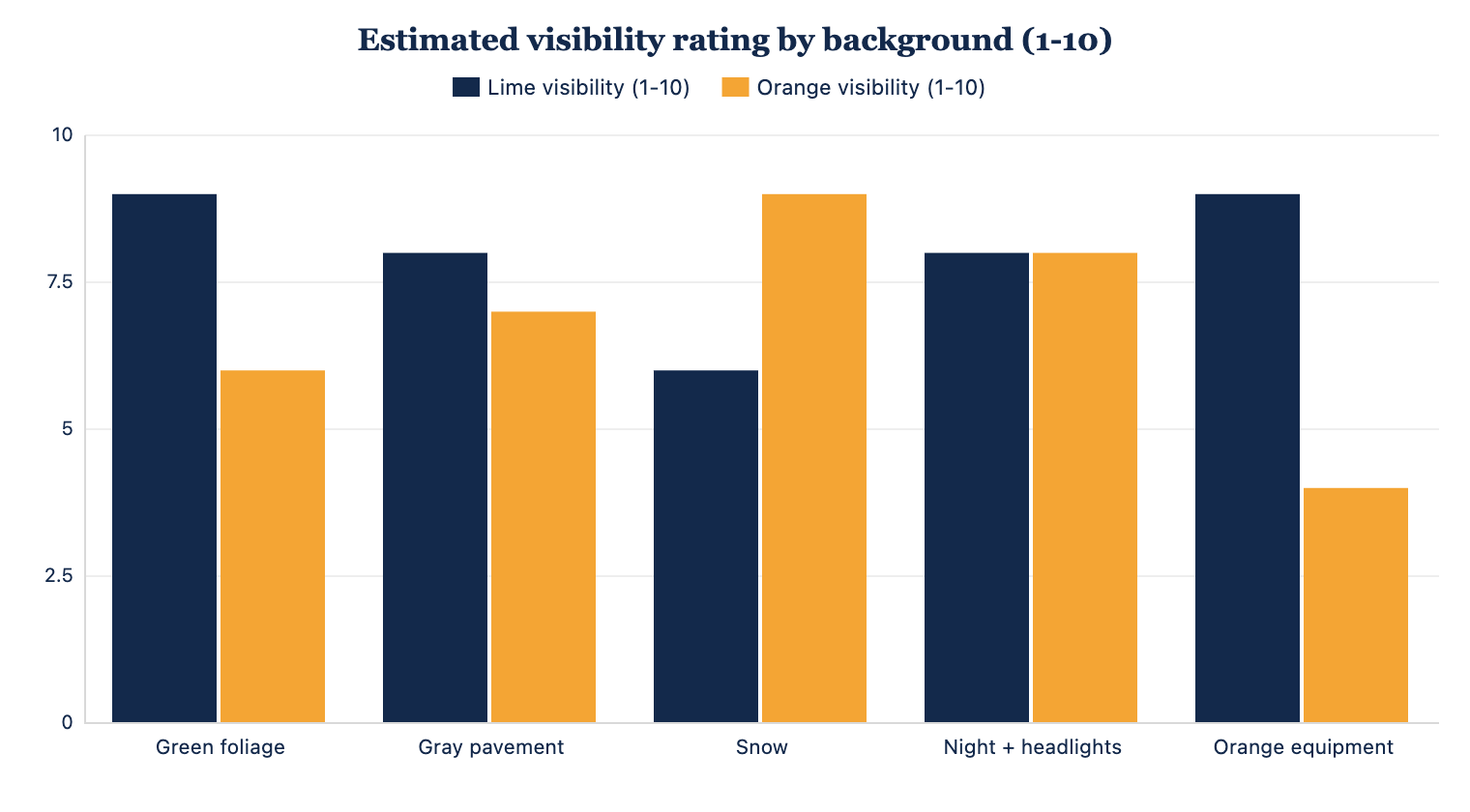
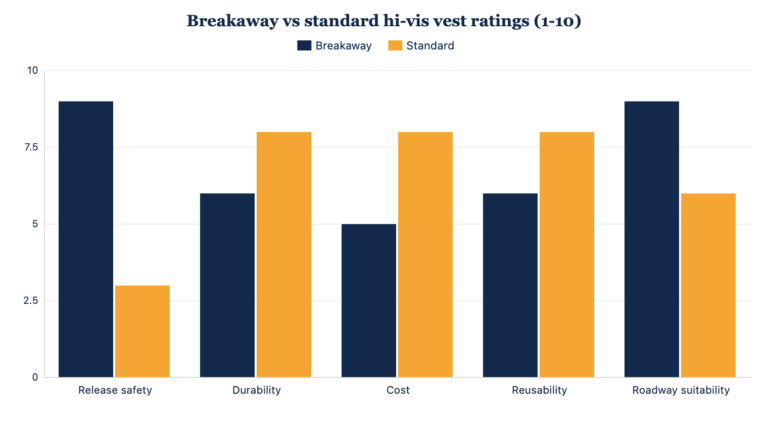
The one scenario worth flagging from that chart is orange equipment itself. A worker in an orange vest standing near orange trucks, cones, or barrels can lose some of the color separation that makes hi-vis apparel effective, which is a strong argument for lime on sites dominated by orange machinery. At night, with headlights providing most of the illumination, the retroreflective tape sewn into the vest does the majority of the work, so lime and orange perform close to evenly once headlights are the main light source.
Reading the Visibility Data Scenario by Scenario
Rather than picking a single “best” color, most experienced safety managers match the vest color to the dominant background their crew works against most often. The table below summarizes the general pattern crews report across common conditions.
| Background | Stronger color | Why |
|---|---|---|
| Green foliage / landscaping | Lime | Sharper contrast against natural green tones |
| Gray pavement / concrete | Lime | Brighter separation from neutral gray |
| Snow / winter roadway | Orange | Lime can wash out against bright white |
| Night with headlights | Roughly even | Reflective tape drives visibility, not base color |
| Orange equipment / cones | Lime | Avoids blending into orange machinery |
Combining Both Colors in One Program
Team-Based Color Coding
Many mid-size contractors stock both hi vis vest colors and assign them by role instead of picking a single company-wide standard. Flaggers and spotters near live traffic often get orange for its strong contrast against asphalt and equipment, while general laborers and warehouse staff wear lime for its daylight brightness. A few programs go further and use color as a quick visual role indicator, so a supervisor can scan a site and tell at a glance who is a flagger versus a general laborer, without reading a badge or a hard hat sticker.
Seasonal Switching
Crews working year-round in snow-belt regions frequently switch their default color seasonally, lime through spring and summer, orange once plow season and low winter light set in. It adds a small line item to the budget, but for a road crew that spends months working roadside in snow glare, the visibility gain over one washed-out lime vest is worth the swap.
Bottom Line
There is no single correct answer between lime and orange hi vis vest colors; there is only the answer that fits your crew’s most common background. Choose lime for green landscaping, gray pavement, and indoor warehouse floors. Choose orange for snow, winter roadways, and sites crowded with orange equipment. Many safety programs end up stocking both and assigning them by role or by season, which is generally the most reliable approach once a crew works a mix of conditions across the year.
Order Custom Hi-Vis Vests in Your Crew’s Colors
Tell us your crew size, ANSI class, and logo, and we will spec lime, orange, or a mixed order that matches how your team actually works.
Get a QuoteHome · About · Buying guides · Companion guide: breakaway vs standard hi-vis vests
Win Free Stuff
Enter below for a chance to win plus receive 10% off your first order.
🎉 You are in!
Check your email for your 10% off code. Good luck!