ANSI/ISEA 107 Explained: What the Hi-Vis Standard Really Means
ANSI 107 is the standard that decides whether a hi-vis vest actually keeps a worker safe — and whether it passes inspection. Officially ANSI/ISEA 107, it sets the rules for high-visibility safety apparel: how much fluorescent background material and reflective tape a garment needs, and which performance class fits which job. If you buy or wear safety vests, understanding ANSI 107 is what separates compliant gear from a vest that just looks bright. This guide breaks it down in plain language.
Get ANSI 107 right and your crew is visible, compliant, and audit-proof; get it wrong and a “safety” vest offers a false sense of protection.
What ANSI 107 actually governs
The standard specifies minimum areas of two materials — fluorescent background fabric for daytime visibility and retroreflective tape for headlight visibility at night — plus how they are arranged so a worker reads as a human form, not just a glowing patch.
The performance classes
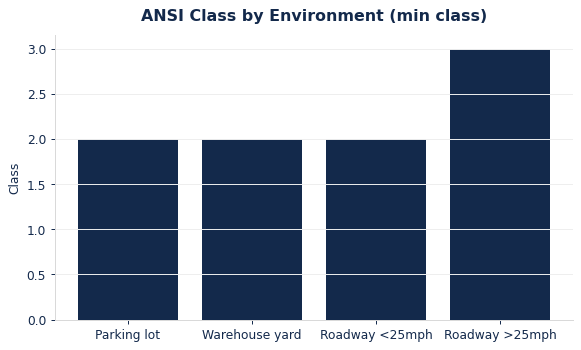
| Class | Visibility | Typical use |
|---|---|---|
| Type O, Class 1 | Lowest | Off-road, low-traffic settings |
| Type R, Class 2 | Medium | Roadways under 25 mph, parking, events |
| Type R/P, Class 3 | Highest | High-speed traffic, low light, full-body |
Why compliance is non-negotiable
Workers on federal-aid highways are required to wear ANSI 107-compliant apparel, and many job sites and contracts mandate it regardless. A compliant vest carries a label citing the standard, the type, and the class.
Does adding a logo affect compliance?
It can. Printing over reflective tape or reducing background material can push a vest out of spec, so custom branding has to be placed where it does not eat into the required visible area. A knowledgeable supplier keeps your vest compliant while adding your logo.
Read the label, match the type and class to the job, and keep any branding clear of the required materials — and ANSI 107 stops being jargon and starts being protection.
More: visit our homepage, or read about what hi-vis vest colors mean.
Win Free Stuff
Enter below for a chance to win plus receive 10% off your first order.
🎉 You are in!
Check your email for your 10% off code. Good luck!