Hi-Vis Vests for Warehouse & Parking Staff: Which Class
Hi-Vis Vests for Warehouse and Parking Staff: Which Class You Need
Not every worksite needs the same vest, and for indoor and low-speed settings, warehouse safety vests raise a common question: which ANSI class is actually required? For most warehouse and parking environments, Class 2 is the standard, with Class 3 reserved for higher-speed traffic. This guide helps warehouse and parking managers choose the right class and build a practical vest program.
Choosing the correct class keeps staff compliant and safe without overspending on features a low-speed environment doesn’t require.
Which class for which environment
Parking lots and warehouse yards generally call for Class 2; roadways under 25 mph also lean Class 2, while higher-speed roadways require Class 3. The guide below maps environment to minimum class.
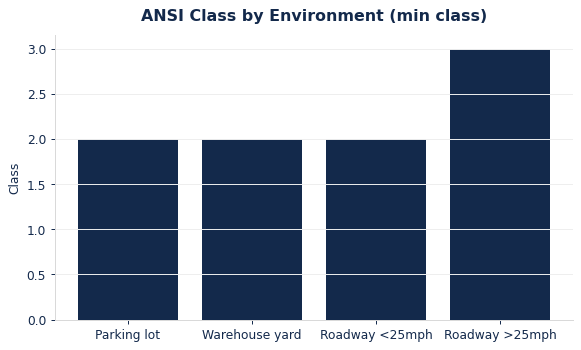
Around forklifts and moving equipment indoors, Class 2 with good reflective coverage is the practical standard — visibility to operators matters as much as the class number.
Building a warehouse vest program
For warehouse safety vests, prioritize durability, easy sizing across a large staff, and clear role or department color-coding. A zipper front and a couple of pockets add day-to-day utility without pushing cost up much.
Budgeting a bulk order
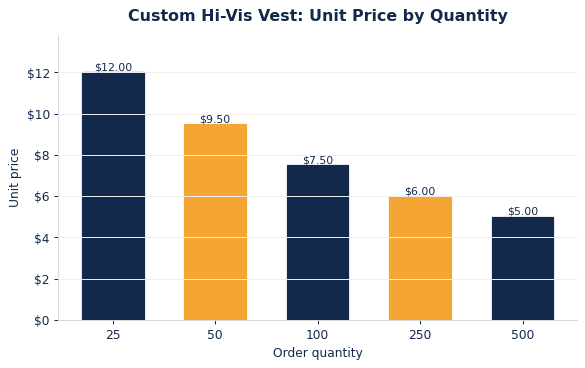
Per-vest cost drops with volume, so outfitting a whole warehouse or parking operation at once is efficient, with easy reorders for turnover. The curve below helps you plan.
| Setting | Min class | Note |
|---|---|---|
| Parking lot | Class 2 | Color-code roles |
| Warehouse yard | Class 2 | Forklift visibility |
| Roadway >25mph | Class 3 | Sleeves/more tape |
Need specific pockets and features too? See our companion guide, our Hi-Vis Vest Pockets & Features: How to Spec for the Job. Explore our custom hi-vis vests, about us, or contact us.
Reading your environment to set the class
Choosing the right class for warehouse safety vests comes down to reading the environment rather than the job title. The factors that matter are traffic speed, how close workers get to moving vehicles or equipment, and lighting conditions. A parking attendant near slow-moving cars and a warehouse worker around forklifts are typically well served by Class 2, while anyone exposed to higher-speed roadway traffic steps up to Class 3. Assessing these conditions for each role keeps everyone appropriately protected without over-speccing.
Indoor environments deserve the same scrutiny even without public roadways. Around forklifts, reach trucks, and busy loading docks, visibility to equipment operators is the priority, and a Class 2 vest with good reflective coverage usually meets that need. Documenting which zones and roles require which class turns a vague safety goal into a clear standard your team can follow and your supervisors can enforce.
Color-coding roles across a facility
In a large warehouse or parking operation, vest color is a management tool as much as a safety one. Assigning distinct colors to forklift operators, floor staff, supervisors, and visitors lets anyone identify who belongs where at a glance, which improves both safety and coordination on a busy floor. Custom orders make it easy to standardize this scheme so it is consistent across shifts and locations rather than improvised.
A color-coding system also streamlines training and access control. New hires and visitors in a clearly different color are easy to spot and guide until they know the facility, and restricted zones become easier to police when the right vest color signals authorization. Building a simple, documented color scheme into your vest program adds organizational value on top of the visibility the vest already provides.
Comfort, sizing, and all-shift wearability
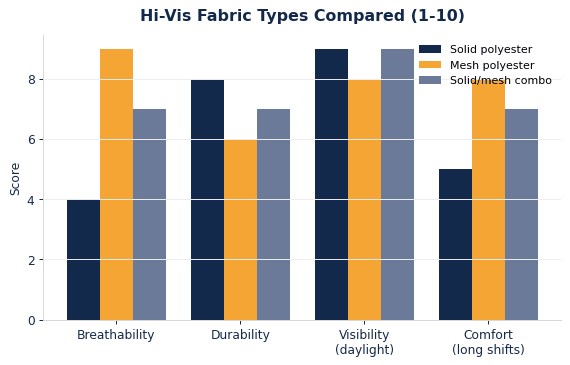
A vest only protects when it is worn, so comfort and sizing drive real-world compliance in a warehouse. Breathable fabrics keep workers comfortable through long indoor shifts, and an adjustable or well-ranged fit ensures the vest sits correctly over whatever staff wear underneath. A comfortable vest with a couple of practical pockets and a zipper front is one workers keep on, while a hot, ill-fitting vest invites workarounds that defeat the purpose.
Sizing across a large, varied staff is worth planning. Offering a sensible size run, plus adjustability, means no worker is stuck in a vest that is too tight or so loose it snags on equipment. Prioritizing all-shift wearability in the spec is what turns a compliant vest into one that is actually on the floor keeping people visible, every hour of every shift.
Budgeting and reordering for a facility
Outfitting a warehouse or parking operation rewards buying at scale. Per-vest cost drops with volume, so kitting out the whole facility at once is more efficient than piecemeal orders, and it keeps the color-coding and branding consistent across the team. Ordering a reasonable overage covers turnover and replacements so a new hire is never left without a vest on their first shift.
A simple reordering plan keeps the program current. Standardizing on defined classes, colors, and sizes, and keeping that spec on file, turns restocks into a quick repeat rather than a fresh decision each time. That consistency also makes budgeting predictable and ensures every worker, new or veteran, wears the same compliant, recognizable vest.
Common questions about warehouse safety vests
Which ANSI class do warehouse and parking staff need?
For most warehouse and parking environments, Class 2 is the standard, including around forklifts and slow-moving traffic. Class 3 is reserved for exposure to higher-speed roadway traffic, so assess the traffic speed and proximity at each role to set the class.
Is Class 2 enough around forklifts?
Yes, generally — around forklifts and indoor equipment, a Class 2 vest with good reflective coverage provides the visibility to operators that matters most. The priority indoors is being seen by equipment operators rather than highway-speed traffic.
How does color-coding vests help a warehouse?
Assigning distinct vest colors to operators, floor staff, supervisors, and visitors lets anyone identify who belongs where at a glance, improving safety and coordination. It also streamlines training and access control, and custom orders make the scheme easy to standardize.
What makes a warehouse vest comfortable enough to wear all shift?
Breathable fabric and an adjustable, well-ranged fit keep the vest comfortable over long indoor shifts, and a zipper front with a couple of pockets adds utility. A comfortable vest is one workers keep on, while a hot, ill-fitting one invites workarounds.
How should a facility budget and reorder vests?
Order for the whole facility at once to get the best per-vest price and consistent color-coding, with a reasonable overage for turnover. Standardize the classes, colors, and sizes and keep the spec on file so restocks are a quick repeat.
Can I add my company logo to warehouse vests?
Yes. Place a logo on the left chest and upper back within the approved areas so it does not reduce the required fluorescent and reflective material below the class minimum. Confirm placement with the manufacturer, and a consistent logo across the team reinforces a professional, organized look.
Do warehouse vests need pockets?
Pockets are optional but practical — a couple of pockets and a zipper front add day-to-day utility for scanners, pens, and phones without much cost. Keep any pockets from covering the required reflective material so the vest stays within its intended class.
Outfitting a warehouse or parking team?
We’ll match the ANSI class and color-code your vests by role.