Hi-Vis Vest Pockets & Features: How to Spec for the Job
Hi-Vis Vest Pockets and Features: How to Spec for the Job
A safety vest keeps a worker seen, but the right pockets and features are what make it genuinely useful on the job. Choosing a hi vis vest with pockets tailored to the trade means radios, tablets, badges, and tools stay within reach instead of in a truck. This guide covers the pockets and features to spec so your crew’s vests actually earn their keep.
Features should follow function: a surveyor needs different storage than a parking attendant. Speccing to the task avoids paying for pockets nobody uses — or lacking the one they need.
Pockets by trade
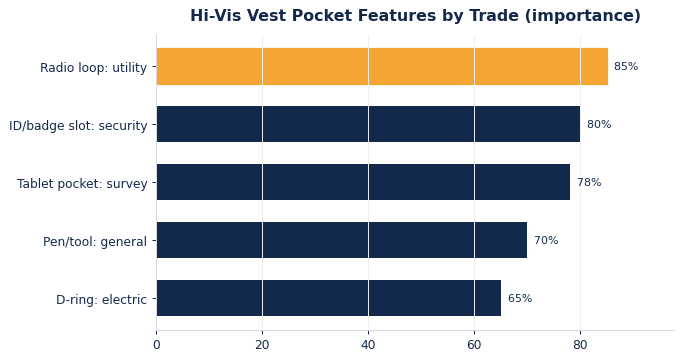
Utility crews want radio loops, security wants a clear ID or badge slot, surveyors want a padded tablet pocket, and electricians value D-rings. The importance ranking below maps features to trades.
List the tools your crew carries daily and spec pockets to match — that single step is what separates a vest that gets worn from one that gets abandoned.
Most-requested features
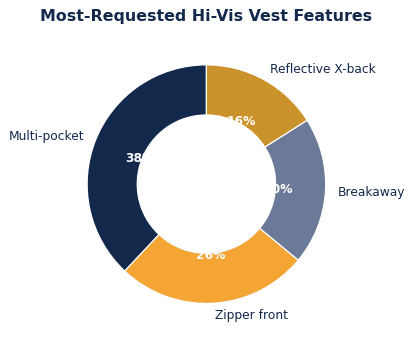
Beyond pockets, multi-pocket layouts, a zipper front, breakaway construction, and a reflective X-back top the request list for custom hi-vis vests. The breakdown below shows what buyers ask for most.
Balancing features, compliance, and cost
More features add cost, so spec what the job needs and skip what it doesn’t. Keep the logo and pockets within approved zones so the vest stays certified, and choose a durable build for trades that are hard on gear.
| Trade | Key feature | Note |
|---|---|---|
| Utility | Radio loops | Reach access |
| Survey | Tablet pocket | Padded |
| Security | ID slot | Visible badge |
| Electric | D-rings | Tool tether |
Not sure which ANSI class you need? See our companion guide, our Hi-Vis Vests for Warehouse & Parking Staff: Which Class. Explore our custom hi-vis vests, about us, or contact us.
Building a feature spec from the daily workflow
The most useful hi vis vest with pockets starts from a simple exercise: list what the crew carries and does every shift, then spec pockets to match. A utility tech who lives on a two-way radio needs a secure radio pocket and mic loops; a surveyor needs a padded pocket sized for a tablet; a security officer needs a clear badge or ID window. Writing down the daily kit turns vest features from a guessing game into a checklist, so the vest earns its place instead of carrying pockets no one uses.
Workflow also dictates pocket type and closure. Frequently accessed items belong in open or hook-and-loop pockets for speed, while valuables belong in zippered pockets for security. Tools that dangle or drop are candidates for a D-ring or tool loop. Designing the layout around how the crew actually moves keeps everything within reach and reduces the trips back to the truck that slow a job down.
Balancing features against comfort and heat
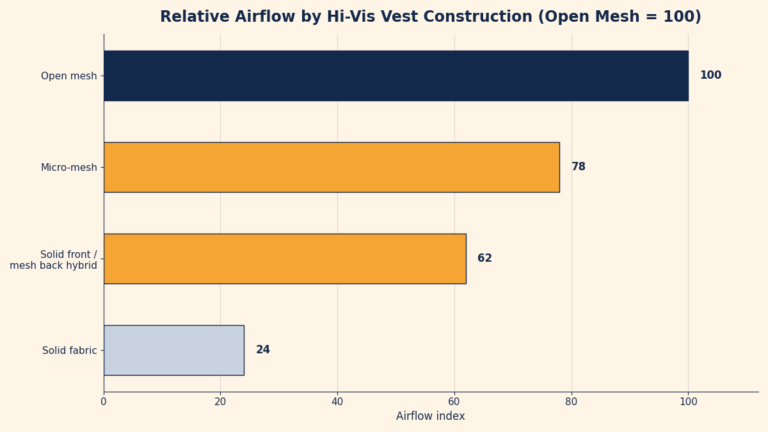
More pockets and heavier construction add capability but also weight and warmth, so the best spec balances utility against comfort, especially in summer. A vest loaded with features can feel hot and bulky if it is built on a solid, non-breathable fabric, which is why matching the feature set to a breathable mesh or a ventilated design matters for crews working in heat. The goal is a vest that carries what the job needs without becoming a burden the crew wants to take off.
Fit interacts with features too. A vest sized to layer over a jacket in winter may sag when worn over a t-shirt in summer, shifting pockets out of easy reach, so an adjustable fit keeps the layout usable year-round. Considering comfort, breathability, and adjustability alongside the pocket list produces a vest crews will actually wear all day rather than one that looks capable on paper but gets abandoned by lunch.
Keeping features compliant and durable
Adding pockets and features must not undermine the vest’s safety rating, so compliance is part of the spec. ANSI garments require minimum areas of fluorescent background and reflective tape, and pockets or logos should be arranged so those minimums are preserved. Confirming with the manufacturer that a heavily pocketed design still meets the intended class keeps the vest both useful and compliant, which is the whole point of a hi-vis garment.
Durability protects the investment on a feature-rich vest. Reinforced pocket seams, quality zippers, and abrasion-resistant fabric keep pockets from tearing and closures from failing under daily loading, and they matter more on a vest that carries tools and devices than on a bare one. Speccing durable construction alongside the features ensures the vest survives the demands you are equipping it for.
Branding a feature-rich vest professionally
A hi-vis vest is one of the most-seen garments on a jobsite, which makes it valuable branding real estate — but the branding has to respect both the compliance zones and the pocket layout. Placing a company logo on the left chest and a larger mark on the upper back within the approved areas keeps the vest compliant while making the crew and company instantly identifiable. Coordinating logo placement so it does not sit on a pocket opening keeps both the branding legible and the pockets usable.
Consistency across a crew reinforces the professional look. When every worker wears the same vest with the same logo placement, the team reads as organized and established on site, which matters to clients and inspectors alike. Confirming decoration placement and size with the manufacturer before a large order ensures the branding is prominent, compliant, and consistent, turning a functional vest into a walking advertisement that still does its safety job.
Common questions about hi-vis vest pockets
How do I choose the right pockets for my crew?
List what the crew carries and does every shift, then spec pockets to match — radio loops for utility, a padded tablet pocket for survey, a badge window for security, D-rings for tools. Designing around the real daily kit ensures the vest earns its place rather than carrying unused pockets.
Do pockets affect the vest’s ANSI rating?
They can if they cover too much of the required background or reflective material. Arrange pockets and logos to preserve the minimum fluorescent and reflective areas, and confirm with the manufacturer that a heavily pocketed design still meets the intended class.
What features matter most for hot-weather crews?
Breathability and an adjustable fit matter most in heat, since a feature-heavy vest on solid fabric can feel hot and bulky. Choose a ventilated mesh or breathable design and match the feature set to it so the vest stays comfortable enough to wear all shift.
Which pocket closures are best for valuables versus quick access?
Use zippered pockets for valuables and devices you want secure, and open or hook-and-loop pockets for items you grab frequently. Matching closure type to how often and how securely each item is used keeps the layout both safe and fast.
How do I keep a feature-rich vest durable?
Spec reinforced pocket seams, quality zippers, and abrasion-resistant fabric, which matter more on a vest carrying tools and devices than on a bare one. Durable construction ensures the vest survives the loading you are equipping it for.
Speccing vests your crew will actually use?
We’ll match pockets, features, and class to your trade and keep the vest compliant.