Mesh vs Solid Hi-Vis Vests for Summer Crews
When July heat settles over a job site, the fastest way to lose a safety argument is to hand a paving crew solid polyester vests. A mesh hi vis vest can feel ten degrees cooler in still air, and on a 95-degree afternoon that difference decides whether vests stay zipped or end up tied around waists where the reflective tape does nothing. But mesh is not automatically the right answer: it snags, it sags under pocket loads, and it prints poorly. This guide compares mesh and solid hi-vis construction honestly — airflow, durability, printability, and cost — so you can pick the right fabric for each crew before the next heat wave, not after it.
How Mesh and Solid Vests Are Actually Built
Mesh construction
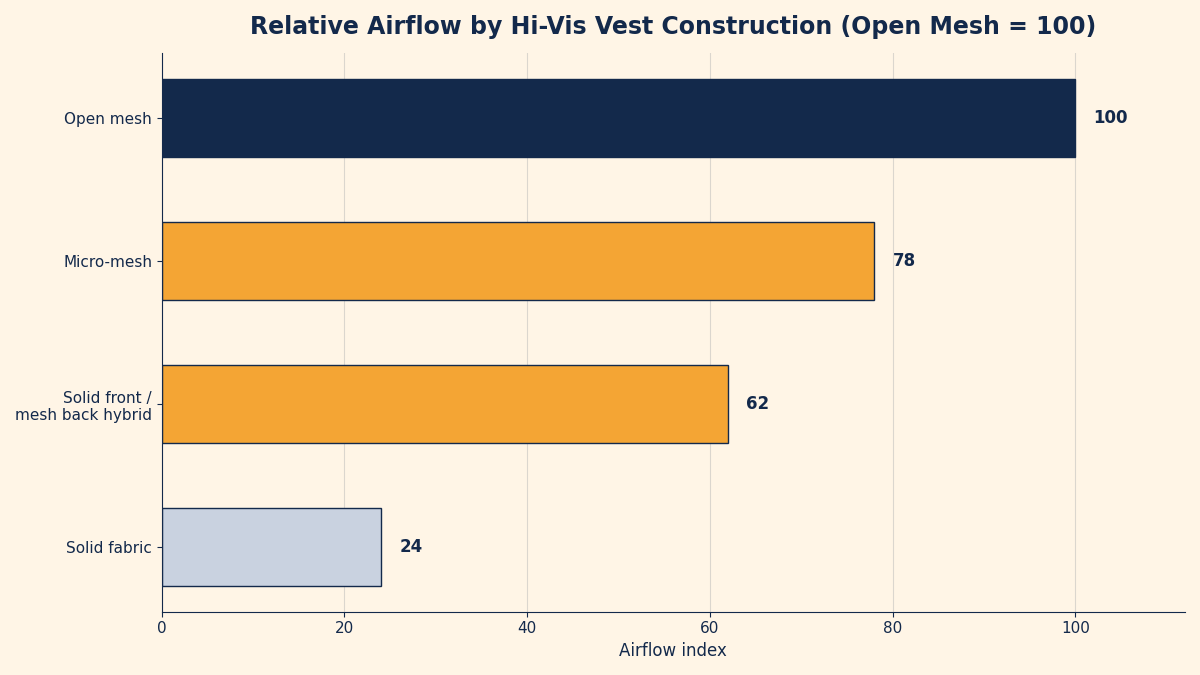
A mesh safety vest is knitted polyester with an open structure — anywhere from fine “micro-mesh” to wide birdseye patterns you can see daylight through. The open knit is what moves air, and it also makes the garment lighter, typically 150–220 grams versus 250–350 for solid fabric. The ANSI/ISEA 107 rating comes from the fluorescent background material and reflective tape, and a compliant mesh vest carries exactly the same class 2 or class 3 rating as a solid one — breathability costs you nothing in legal visibility.
Solid construction
Solid vests use tightly woven or knit polyester. They block wind, hold screen-printed logos crisply, resist snags from rebar ties and chain link, and support sewn-on pockets under real weight. They also trap heat, which is why the best summer program is usually a mixed fleet rather than one fabric for everyone.
The Head-to-Head Comparison
| Factor | Mesh Hi-Vis Vest | Solid Hi-Vis Vest |
|---|---|---|
| Airflow / cooling | Excellent — best choice above ~85°F | Poor in direct sun and still air |
| Durability around snags | Fair — open knit catches on rebar, brush | Good — tight weave resists pulls |
| Pocket load support | Fair — stretches under heavy gear | Excellent — holds tools and tablets |
| Logo printing | Fair — broken surface softens fine detail | Excellent — crisp screen prints |
| Wind/light rain protection | None | Moderate |
| Typical class 2 price | $8–$18 | $12–$25 |
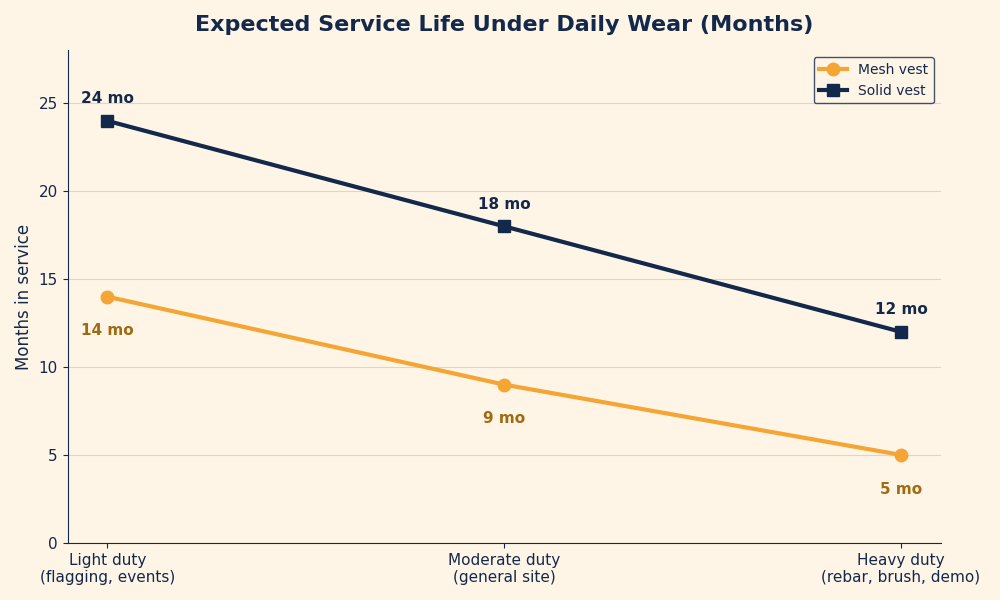
| Typical service life (daily use) | 6–12 months | 12–24 months |
When Mesh Wins
- Paving, roofing, and concrete crews in summer: radiant heat from the surface plus sun from above makes airflow the top priority.
- High-exertion trades: laborers, landscapers, and flaggers moving all day generate the body heat that mesh vents best.
- Humid climates: evaporative cooling only works if air reaches the skin; mesh is the difference-maker in Gulf Coast humidity.
- Compliance-challenged crews: if vests keep coming off in the afternoon, breathable hi-vis is cheaper than any amount of enforcement. A vest on a worker’s back beats a better vest hanging in the truck.
When Solid Wins
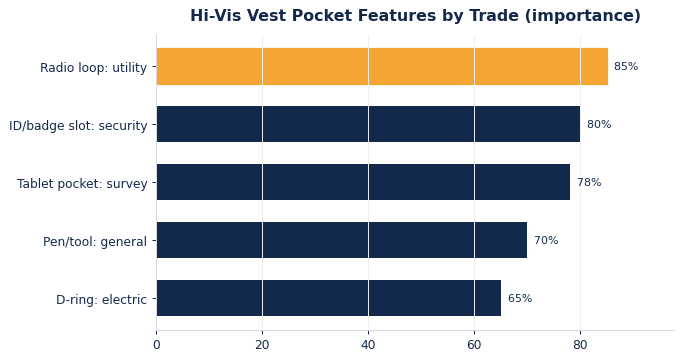
- Gear-heavy roles: inspectors, foremen, and surveyors whose vests carry radios, books, and tablets need solid fronts for pocket strength.
- Snag-heavy environments: rebar work, demolition, brush clearing, and fence lines chew through open-knit mesh.
- Brand-forward programs: if the vest is a rolling billboard for your company, solid fabric prints your logo sharpest and keeps it legible longest.
- Shoulder seasons and wind: the same open structure that cools in July chills in October; solid fabric extends the wear window.
The Hybrid Option Most Fleets Land On
Solid-front, mesh-back vests split the difference: a printable, pocket-friendly front panel with an open-knit back where most body heat escapes. For mixed crews — some carrying gear, some not — hybrids let you standardize one SKU and one logo placement across the fleet. They cost a dollar or two more than all-mesh but typically outlast it, because the high-wear front takes the abuse. If your crew chiefs carry loaded vests, note that the same logic drives surveyor garment design — our guide to surveyor safety vests covers solid-front construction and tablet pockets in depth.
Summer Heat Safety Beyond the Fabric
Fabric choice is one lever in a heat program, not the whole program. Pair breathable vests with:
- Lighter color selection where options allow: fluorescent lime and orange perform the same for visibility, but crews report lime feels marginally cooler in direct sun.
- Two-vest rotation: a sweat-saturated vest stops breathing; issuing two mesh vests per worker lets one dry while one works.
- Scheduled shade and water breaks: per OSHA heat guidance, especially for new workers who have not acclimatized.
- Condition checks: UV exposure fades fluorescent dye; a vest that has gone pale yellow-grey no longer delivers its rated daytime visibility, whatever the label says. Summer sun accelerates this — expect to retire heavily used mesh vests by season’s end.
Making the Call for Your Crew
Start with two questions. First, what does each role carry? Anything heavier than a phone argues for a solid or hybrid front. Second, what is the snag environment? Open structures near rebar, brush, or demolition debris shorten mesh life dramatically. Then order samples of your top two candidates and run them for a week in real heat — the crew’s verdict after five shifts is worth more than any spec sheet. When you are ready to standardize, a printed mesh hi vis vest program costs less than most managers expect, and consistent branding across the fleet makes your crew instantly identifiable to inspectors and clients alike. Browse options at customhivisvests.com, see how our process works on the about page, or dig into more comparisons on our blog.
Keep your summer crew cool, compliant, and branded.
Custom-printed mesh, solid, and hybrid hi-vis vests with fast turnaround.
Win Free Stuff
Enter below for a chance to win plus receive 10% off your first order.
🎉 You are in!
Check your email for your 10% off code. Good luck!