Custom Hi-Vis Vests for Events & Volunteers: Which Class & Why
Custom Hi-Vis Vests for Events & Volunteers: Which Class & Why
Handing every volunteer the same vest without thinking about the setting is how events end up with either overkill (an ANSI Class 3 vest at an indoor expo) or a real gap (no vest at all directing traffic near a road). Hi-vis vests for events need to match the actual hazard — traffic exposure, lighting, and crowd density — not just look official on a lanyard. Choosing the right class also keeps the order affordable, since higher classes cost more per vest for protection an indoor event doesn’t need.
This guide covers which ANSI class fits which event setting, why hi-vis vests for events matter even when there’s no vehicle traffic at all, and how to spec a vest that balances visibility with volunteer comfort and branding space.
Matching ANSI class to the event setting
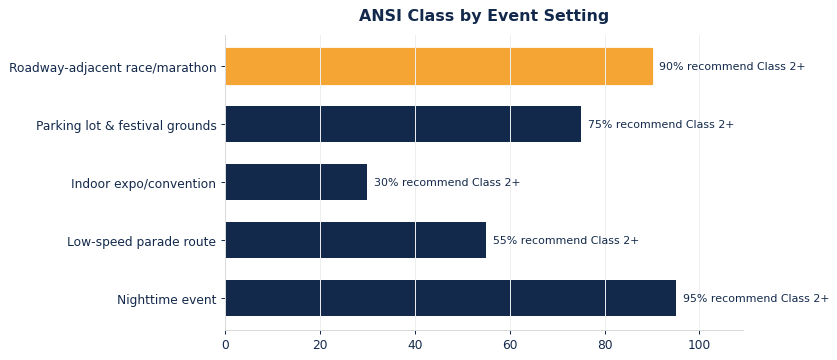
ANSI/ISEA 107 sorts high-visibility apparel into Class 1, 2, and 3, with the number rising alongside the required visibility for higher-speed traffic, lower light, or greater work-zone risk. A marathon or road-adjacent event with vehicle traffic nearby calls for at least Class 2, and often Class 3 for nighttime starts or finish-line work near open roads. A parking lot or festival grounds crew, directing pedestrian and slow-moving vehicle traffic, typically does well with Class 2.
Indoor expos and conventions rarely need a true ANSI-rated vest at all — there’s no vehicle hazard, so a lighter-weight, non-certified hi-vis vest that’s more about branding and staff identification than reflective performance is the more practical, comfortable choice. Matching the class to the actual setting, rather than defaulting to the highest option, is what keeps hi-vis vests for events useful instead of just uncomfortable.
When to size up a class regardless of the venue
Nighttime events push the recommendation up a class almost automatically, since reduced light dramatically increases the value of reflective tape regardless of traffic speed. If your event runs past dusk in any capacity, treat it as a higher-visibility-need setting even if daytime traffic exposure would otherwise call for a lighter vest.
Volunteer comfort matters as much as compliance
A vest a volunteer takes off after twenty minutes because it’s hot or ill-fitting isn’t protecting anyone. Mesh-back construction, adjustable side straps, and a lightweight fabric keep volunteers comfortable through a multi-hour shift, especially at outdoor summer events where a stiff, non-breathable vest becomes its own hazard.
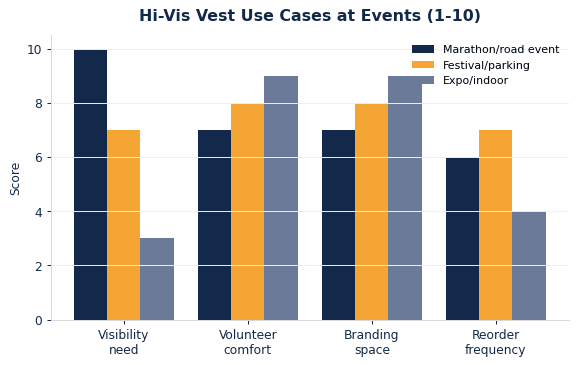
The chart below compares typical event use cases on visibility need, comfort priority, and how much room there is for event branding on the vest.
Spec’ing an order across your volunteer program
Most events benefit from stocking one primary class for the bulk of volunteers and a smaller batch of a higher class for roles with direct traffic exposure, like course marshals or parking directors.
| Volunteer role | Recommended class | Notes |
|---|---|---|
| Course marshal / traffic | Class 2 or 3 | Higher class if nighttime or roadway-adjacent |
| Parking / grounds crew | Class 2 | Balance visibility with all-day comfort |
| Indoor expo / info desk | Non-rated hi-vis or light Class 1 | Branding and ID over reflective performance |
Order role-specific vests so a marshal near traffic and a volunteer at an indoor info desk aren’t stuck in the same heavy, over-rated vest. For fabric and reflective tape details that affect how well a vest performs, see our companion Hi-Vis Vest Fabric & Reflective Tape: How ANSI Rates Performance, and browse styles across our custom hi-vis vests range.
Managing vests across a multi-day or multi-shift event
Multi-day events add a logistics layer that a single-day race doesn’t have to worry about: vests need to be collected, checked, and reissued across shifts without losing track of inventory or ending up with volunteers wearing a vest that didn’t survive the previous day’s weather. A simple check-in and check-out process at a central table, even a basic sign-out sheet, prevents the slow bleed of vests that quietly walk off over a multi-day event.
Plan for weather changes across the event’s duration. A vest that’s comfortable on a mild morning shift can become miserable by a hot afternoon, so having a lighter-weight option available for volunteers switching shifts, rather than one uniform-weight vest for the whole event, keeps compliance high because volunteers actually want to keep wearing it.
Budget a reasonable loss-and-damage rate into a multi-day or annual event’s vest order — vests get left behind, rained on, or torn on fencing more than event organizers expect. Ordering a 10 to 15 percent buffer above the exact volunteer count avoids a mid-event scramble to source a handful of replacements.
Color-code vests by role, not just by hi-vis class
If your event has multiple volunteer roles — medical, parking, course marshal, info desk — consider a secondary color or trim distinction on top of the base hi-vis fabric. It lets attendees and staff identify who to approach for a specific need at a glance.
Branding a vest without compromising visibility
Event organizers often want a vest to double as branding — a logo, event name, or sponsor mark — and that’s compatible with hi-vis performance as long as the branding doesn’t cover required reflective tape or reduce the minimum fluorescent fabric area the vest’s class requires. Confirm placement with your vendor before finalizing art, not after.
A printed back panel with the event name in a high-contrast color reads well from a distance and gives spectators or attendees an easy way to identify official volunteers, which is itself a small safety and crowd-management benefit beyond the reflective performance.
For sponsor-branded vests, keep sponsor logos smaller and positioned on the chest or a side panel rather than the back, reserving the back panel — the most visible surface from behind — for the event name or a clear ‘STAFF’ or ‘VOLUNTEER’ label that helps attendees identify who to ask for help.
Collect vests at the end for reuse next year
Set up a clearly marked return point at the end of the event and offer a small incentive, like early access to next year’s registration, for returned vests. Reused vests cut next year’s order size and keep event costs down.
Consider how vest sizing affects both visibility and comfort across a diverse volunteer pool. A vest that’s too small rides up and reduces the visible fluorescent area exactly where it matters most, while one that’s too large flaps loosely and can catch on barriers or equipment. Ordering a real size range — not just a one-size-fits-most option — and collecting sizes during volunteer registration avoids the day-of scramble of handing out whatever’s left in the bin. It’s a small logistics step that pays off directly in both compliance and comfort, since a volunteer in a properly fitted vest is far more likely to keep it zipped and worn correctly through a long shift than one fighting with a vest that doesn’t fit right in the first place.
Frequently asked questions
Do all event volunteers need an ANSI-rated vest?
No. Only roles with real vehicle traffic exposure or low-light conditions need a certified ANSI class. Indoor or low-risk roles can wear a lighter, non-rated hi-vis vest focused on visibility and branding.
What class hi-vis vest is best for a nighttime event?
Push to at least Class 2, and Class 3 for anyone near open roads after dark. Reduced light makes reflective tape coverage far more valuable than fluorescent color alone.
Outfitting event volunteers?
Tell us your event type and roles and we’ll spec hi-vis vests matched to each volunteer’s exposure.