Hi-Vis Vest Fabric & Reflective Tape: How ANSI Rates Performance
Hi-Vis Vest Fabric & Reflective Tape: How ANSI Rates Performance
Two vests can look identically fluorescent on a shelf and perform completely differently in the field, because hi-vis vest fabric and reflective tape quality — not just the bright base color — are what ANSI/ISEA 107 actually measures. A cheap fabric that fades after a few washes, or reflective tape that dulls after a season outdoors, quietly downgrades a vest’s real-world performance well below its printed rating. Understanding what the standard actually tests helps buyers spot a genuinely compliant vest versus one that just looks the part.
This guide breaks down the hi-vis vest fabric options that meet ANSI 107, how reflective tape performance is measured and where it needs to sit, and how to spec a vest that holds its rating through real-world wear.
Fluorescent fabric: what ANSI actually measures
ANSI/ISEA 107 sets minimum background-fabric area requirements by class, using fluorescent yellow-green or orange-red material that performs well in daylight. The color has to meet a minimum brightness and coverage area, which is why a vest can’t simply be ‘bright yellow’ — it needs enough of that fluorescent fabric visible from multiple angles to count toward the rated class.
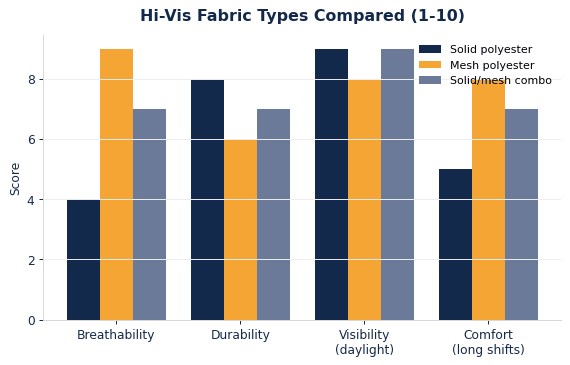
Fabric weight and weave affect real-world durability more than most buyers expect. A lightweight mesh keeps volunteers or workers cooler across long shifts but can show wear and fading faster than a heavier solid-weave polyester, which holds color longer under repeated washing and sun exposure but breathes less. The chart compares the common fabric types.
Solid vs mesh: picking the right base
Choose solid polyester for cooler-climate or lower-activity roles where durability matters most, and mesh or a solid/mesh combo for hot-climate or high-activity roles where breathability keeps the vest on the wearer’s back instead of tossed aside. A combo vest — solid front panel, mesh back — is a popular middle ground for exactly this reason.
Reflective tape: placement matters as much as the material
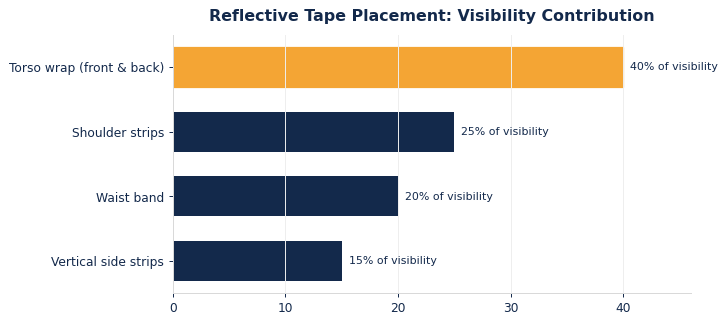
The reflective tape itself has its own performance rating, typically measured by retroreflectivity — how much light it bounces back to its source, like a car’s headlights. But even top-rated tape underperforms if it’s placed poorly. ANSI 107 specifies minimum tape coverage and placement patterns, generally requiring a horizontal band around the torso and vertical strips over the shoulders, because that combination stays visible whether the wearer is facing, turning, or bending.
The chart below shows roughly how much different tape placements contribute to overall visibility, which is why torso-wrap coverage is the non-negotiable core of any compliant design.
Spec’ing fabric and tape that hold up
For buyers ordering in volume, the fabric and tape grade matter more over a vest’s lifespan than the upfront price difference between a budget and a quality option. The table below is a simple way to spec by expected use.
| Use case | Recommended fabric | Tape grade |
|---|---|---|
| Daily outdoor work | Solid polyester or combo | High-retroreflectivity, sewn not glued |
| Occasional event use | Lightweight mesh | Standard ANSI-compliant tape |
| Nighttime or roadway work | Solid/mesh combo | Maximum coverage, sewn tape |
Ask suppliers whether reflective tape is sewn or glued — sewn tape survives washing far longer than adhesive-backed tape, which peels at the edges after repeated laundering. For matching a vest class to your specific event or job setting, see our companion Custom Hi-Vis Vests for Events & Volunteers: Which Class & Why, and browse fabric options across our custom hi-vis vests range.
How washing affects fabric and tape performance over time
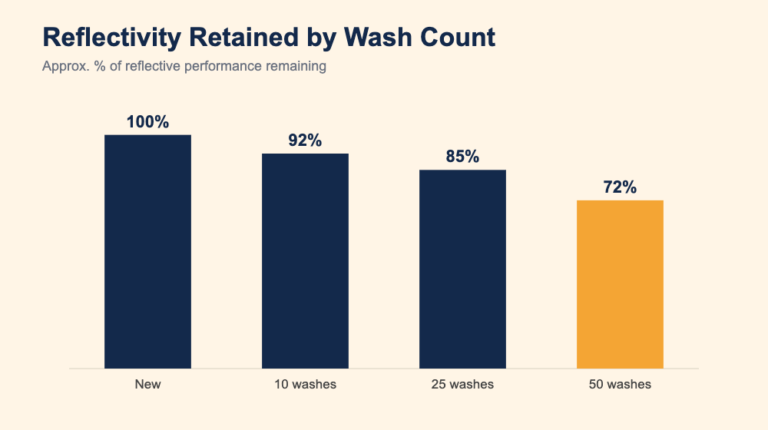
Repeated industrial or home laundering is the single biggest factor in how quickly a hi-vis vest’s real performance drops below its printed rating, even when the vest still looks bright to the eye. Both fluorescent fabric brightness and reflective tape retroreflectivity degrade gradually with washing, heat, and abrasion, which is why ANSI-compliant garments typically list a maximum recommended wash count or a visual-inspection standard rather than a lifetime guarantee.
Cold or warm gentle-cycle washing, avoiding bleach and fabric softener, and air-drying rather than high-heat tumble drying all extend both fabric and tape life meaningfully. Fabric softener in particular can coat reflective tape with a film that measurably reduces its retroreflectivity, even though the vest looks and feels fine afterward.
For vests in heavy daily rotation, a simple visual check against a known-new reference vest every few months catches fading before it drops the garment below its rated performance. Comparing side by side is far more reliable than judging an individual vest in isolation, since gradual fading is hard to notice day to day.
Sewn tape outlasts glued tape by a wide margin
Adhesive-backed reflective tape looks identical to sewn tape when new but starts lifting at the edges after repeated washing, especially with hot water or a dryer. For any vest expected to be laundered regularly, specify sewn-on tape rather than adhesive.
Choosing between certified and non-certified hi-vis fabric
Not every hi-vis vest needs to carry a formal ANSI/ISEA 107 certification — for indoor events, low-hazard settings, or pure branding use, a non-certified fluorescent fabric can look just as bright while costing less, since it skips the testing and documentation overhead a certified garment carries.
For any role with genuine traffic exposure or a workplace safety requirement, however, certification isn’t optional, and a buyer should ask for the specific ANSI class and a copy of the compliance documentation rather than trusting a vendor’s general description of a product as ‘high visibility.’ Some non-certified fabric looks similarly bright but hasn’t been tested to the same reflective and coverage standards.
When in doubt about which category a use case falls into, default to certified fabric — the cost difference per vest is usually small relative to the order, and it removes any ambiguity if a safety inspection or an incident ever raises the question of whether the correct-class garment was actually worn.
Ask for a retroreflectivity test result, not just a class label
A vendor’s ANSI class claim should be backed by an actual test result showing the reflective tape’s retroreflectivity value, not just a label on the product page. Request the documentation for any bulk order going to a genuinely high-hazard role.
Factor climate into fabric choice as much as hazard level. Vests used primarily in hot, humid conditions benefit from mesh or a solid/mesh combo regardless of the ANSI class required, since heat stress is its own safety risk that can undermine compliance if workers start leaving a stifling vest unzipped or removed entirely. Vests used in cold, wet climates can prioritize a heavier solid weave that layers over a jacket without excessive bulk, since breathability matters less when the outer layer is already doing the work of temperature regulation. Matching fabric weight to the climate your crew actually works in, not just the hazard class on paper, is what keeps a compliant vest a worn vest.
Frequently asked questions
Does reflective tape wear out over time?
Yes. Retroreflectivity degrades with repeated washing, abrasion, and UV exposure, which is why ANSI-compliant vests should be inspected periodically and replaced when tape looks dull or damaged, not just when the fabric fades.
Is mesh hi-vis vest fabric as visible as solid fabric?
Mesh can meet the same ANSI fluorescent-fabric requirements as solid polyester, but check the specific product’s rated class — some lightweight mesh vests are built for comfort over top-tier compliance.
Need vests that hold their rating?
Tell us your use case and we’ll spec hi-vis vest fabric and reflective tape that performs, not just looks bright.