Surveyor Safety Vests: Pockets, Features & Class Ratings
A surveyor safety vest is a different animal from the mesh pullover hanging by the site gate. Surveyors carry field books, data collector tablets, marking paint, lath tape, plumb bobs, and a phone that never stops ringing — and every one of those items needs a home that keeps hands free and gear off the ground. The best surveyor safety vest is essentially a wearable toolbox that still meets ANSI/ISEA 107 visibility requirements. This guide walks through the pocket layouts that matter, the features that separate a true surveyor vest from a standard hi-vis vest, and how to choose the right class rating for the environments your crew actually works in.
What Makes a Vest a “Surveyor” Vest?
Manufacturers use the surveyor label for vests built around load-carrying, not just visibility. Four design elements define the category.
Pocket count and placement
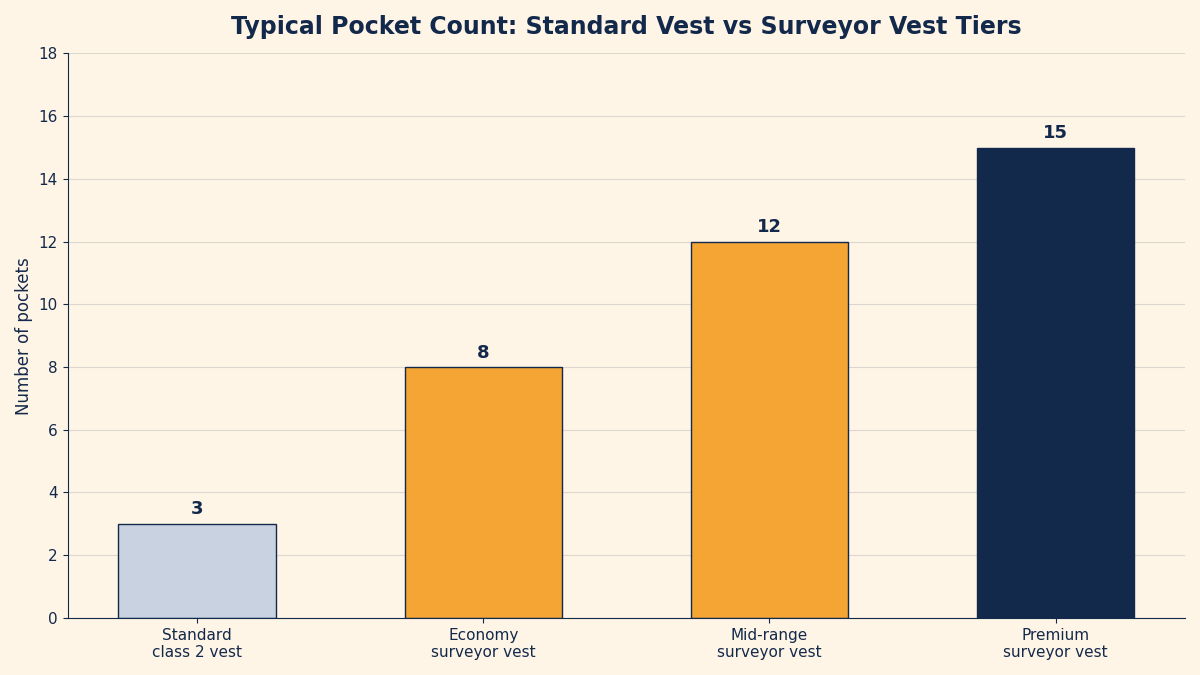
A standard class 2 vest ships with two to four pockets. A surveyor cut typically carries eight to fifteen, split between chest, lower front, and interior positions. Look for a mix of open-top drop pockets for quick access and flap-secured pockets for anything you cannot afford to lose over a manhole.
Full-length front zipper with storm flap
Surveyors put vests on and take them off constantly moving between truck, office, and field. A heavy-duty zipper outlasts hook-and-loop closures by seasons, and a storm flap keeps the zipper from scratching instrument screens.
Load distribution
A loaded vest can carry six to ten pounds. Better vests use a yoked shoulder design that moves weight off the neck and onto the shoulders, padded in premium models. If your crew ends the day with neck strain, the vest — not the workload — is usually the culprit.
Durable solid-front construction
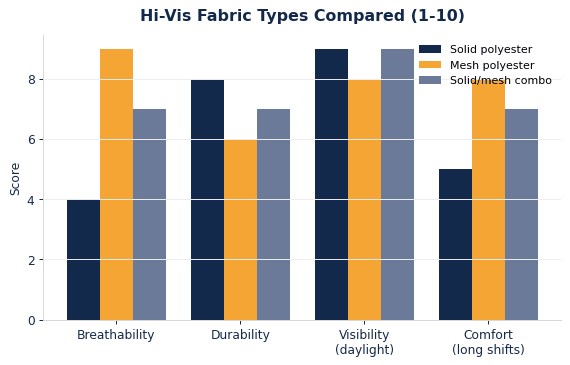
Most surveyor vests use solid polyester fronts (for pocket strength) with mesh backs (for airflow). All-mesh surveyor vests exist for brutal summers, but pockets sewn to mesh tear out sooner under tablet weight.
The Pocket Layout That Actually Works in the Field
Ask a crew chief what they want and the answer is rarely “more pockets” — it is the right pockets. Here is the layout experienced field crews converge on:
| Location | What Goes There | Must-Have Feature | |
|---|---|---|---|
| Tablet/data collector pocket | Lower front or back panel | 7–10 inch tablet or data collector | Padded, flap-secured, fits device with case |
| Field book pocket | Chest | Standard 4.75 x 7.25 in field book | Sized so the book does not flop out when bending |
| Pen/pencil slots | Chest | Pens, pencils, markers | Three or more slots, elastic or divided |
| Radio/phone pocket | Upper chest | Radio or smartphone | Vertical with retention tab, antenna clearance |
| Drop pockets | Lower front, both sides | Lath tape, flagging, chalk | Deep open top for one-hand access |
| Interior security pocket | Inside chest | Wallet, keys, truck fob | Zippered |
| Marking paint loop | Side seam or lower front | Inverted paint can | Reinforced stitching |
The tablet pocket deserves special attention because it is the newest addition to the category and the least standardized. Measure your data collector with its rugged case before ordering — plenty of “tablet pocket vests” fit a bare 8-inch tablet but not the same tablet in an armored case. A pocket that is too tight gets abandoned, and a $1,500 data collector goes back to riding on the tailgate.
Class 2 or Class 3: Which Rating Does a Survey Crew Need?
ANSI/ISEA 107 class ratings are about how much background material and reflective tape a garment carries, which determines where it can legally and safely be worn.
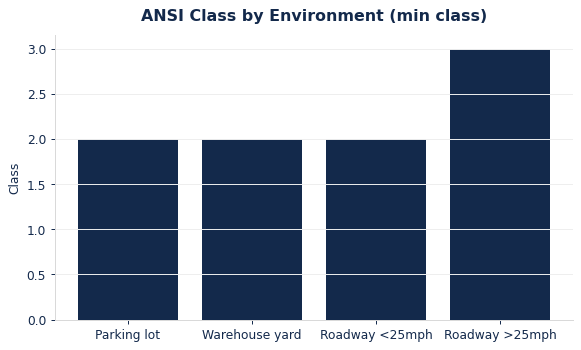
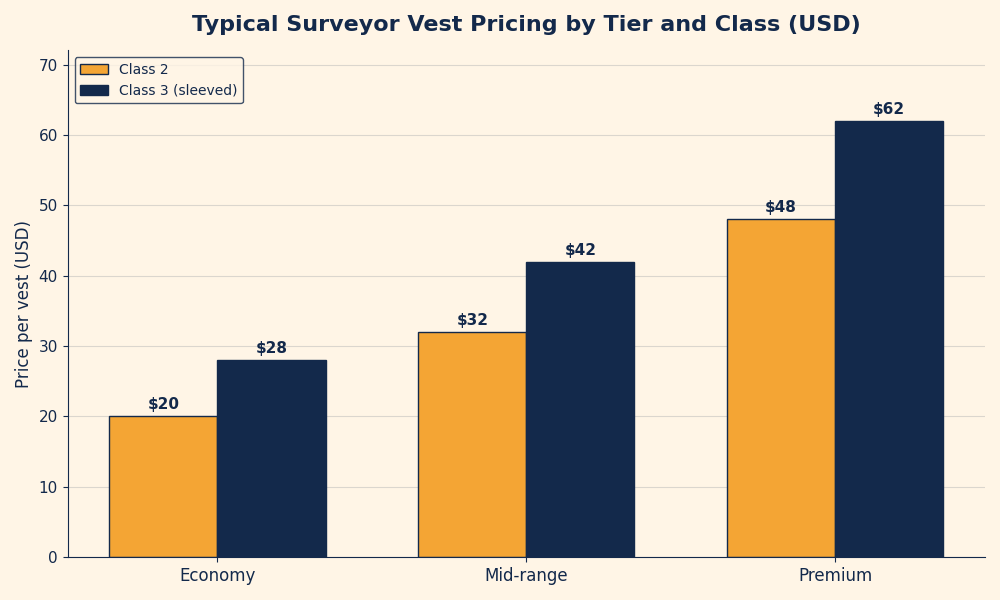
- Class 2 surveyor vest: the workhorse for most survey crews. Appropriate for work zones with traffic under about 50 mph, utility locating, boundary and topo work near roads, and general construction sites. The overwhelming majority of surveyor vests sold are class 2 because the cut works well with the pocket load.
- Class 3: required in practice for highway corridors, night work, and any environment with traffic at or above 50 mph. Class 3 needs sleeves to qualify, so class 3 surveyor garments are usually vest-plus-sleeve designs or are paired with a class 3 jacket over the vest in cooler months.
- Class 1: not appropriate for road-adjacent survey work; skip it.
A practical fleet approach: issue class 2 surveyor vests as the daily standard, and keep class 3 sleeved layers in the truck for DOT corridor days. If your work is mostly highway, buy the class 3 surveyor cut outright.
Features Worth Paying For (and Two That Aren’t)
Worth it
- Bar-tacked pocket corners: the single best predictor of vest lifespan under load.
- Padded shoulder yoke: transforms comfort on 10-hour staking days.
- D-ring or badge tab: for GPS tethers, IDs, or a chest-mounted camera.
- Contrasting-trim color options: safety orange with contrasting trim reads “surveyor” to traffic and inspectors alike; teams working near tree lines often prefer orange over lime for contrast.
- Tall sizing: a vest that rides up over a belt of gear stops being class 2 compliant in practice because the tape sits wrong.
Usually not worth it
- Built-in hydration sleeves: they add heat and are rarely used; crews carry bottles.
- More than ~15 pockets: past that point crews lose track of where things live, which defeats the purpose.
Ordering for a Crew: Sizing, Branding, and Spares
Surveyor vests run snug once loaded, so size up relative to a standard vest — most crews order one size larger than their shirt size. Plan on two vests per field employee: one in use, one in the wash or drying out, because a sweat-soaked vest loses its crispness of color and nobody re-wears it happily. Add your company name and logo on the back panel above the reflective tape and a left-chest print on the front; on a solid-front surveyor vest, printing holds up far better than it does on mesh. If your team also runs flagging or inspection staff in standard vests, keep the brand placement consistent across both garment types — you can see our full range at customhivisvests.com and read about our printing process on the about page.
Hot-climate crews should also weigh fabric choice for the back panel before finalizing an order — our companion guide to mesh vs solid hi-vis vests for summer crews breaks down when airflow beats pocket durability, and more buying guides are on the blog.
The Bottom Line
Buy the pocket layout your workflow needs, buy the class rating your traffic exposure demands, and spend the extra few dollars on bar-tacks and shoulder padding. A well-chosen surveyor safety vest keeps a $1,500 data collector secure, a field book dry, and a crew visible — and it will still be doing all three two seasons from now.
Outfitting a survey crew?
Custom-printed surveyor vests in class 2 and class 3, with low minimums and fast turnaround.
Win Free Stuff
Enter below for a chance to win plus receive 10% off your first order.
🎉 You are in!
Check your email for your 10% off code. Good luck!