Winter Hi-Vis Vest Planning: How to Order for Short Days and Dark Shifts
Winter is when hi vis vests matter most, because short days push crews into dark mornings and early sunsets. Plan a winter order by checking whether roadside roles need Class 3, sizing vests over cold-weather jackets, keeping logos clear of reflective tape and ordering before the clocks fall back. Custom Hi-Vis Vests returns a free mockup within 24 hours to start that plan.

- Dark-season shifts make reflective tape the main source of visibility
- Crews near faster traffic in low light are the strongest case for Class 3
- Collect sizes while workers wear their winter jackets
- Free mockup within 24 hours, about 2 weeks standard production, minimum 12
Why does the dark season change how you order hi vis vests?
The dark season changes a hi vis vests order because most of your crew’s exposure shifts into low light. Once the clocks fall back in early November, many start times and quitting times land in dusk or full dark, and drivers see your people mostly through headlights. Daytime color matters less in those hours and reflective tape does most of the work.
That shift raises three practical questions for anyone buying hi vis vests for winter. First, is the current class still the right call for the hours your crew actually works? Second, will the vests fit over the layers people wear in the cold? Third, will the logo and any role text stay out of the way of the reflective bands so the vest still reads as safety gear at night?
Fall is the natural moment to answer those questions. Crews are about to change their routines, budgets for the new year are being set, and a fresh order placed now arrives before the shortest days. Custom Hi-Vis Vests sends a free mockup within 24 hours, and standard production runs about 2 weeks after you approve it, so an order placed in late fall can be in hand well before the darkest stretch of winter.
Should winter crews move from Class 2 to Class 3 hi vis vests?
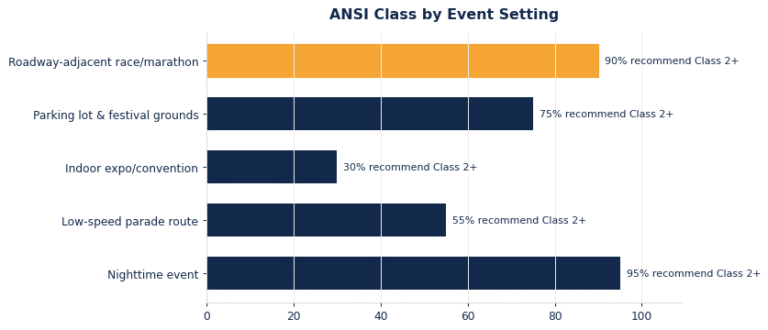
Winter crews should look hard at Class 3 hi vis vests when their work puts them near faster traffic in low light. ANSI/ISEA 107 ties the class to the hazard: Class 2 suits many roadside and site tasks, while Class 3 adds more background fabric and reflective coverage for higher-risk exposure, which is exactly what dark mornings and early sunsets create.
You do not have to switch the whole company. A common winter approach is to split the order by role:
- Flaggers, roadside and towing crews who stand near moving traffic in darkness are the strongest case for Class 3 safety vests.
- Yard, warehouse and lot staff who work around slower equipment may stay in Class 2, as long as your safety plan agrees.
- Supervisors and visitors can match whichever class the area they enter calls for.
The class decision belongs to your safety plan, your client or general contractor, and any agency rules for the work zone. What a supplier can do is make it easy to carry two classes in one order with the same logo, so every crew looks like one company. Custom Hi-Vis Vests can quote mixed classes together and show both on the same mockup, which keeps the winter changeover to a single approval instead of two separate projects.
Which winter jobs need branded hi vis vests most?
The winter jobs that need branded hi vis vests most are the ones that put people near vehicles during the darkest hours. Branding matters here for more than looks: a clear company name on the back tells drivers, property managers and the public who the worker is and why they are standing in the road or the lot.
| Winter job | Why the dark season matters | Vest points to settle |
|---|---|---|
| Snow removal and plow support | Work starts before dawn and often runs through storms | Class for the road exposure, room over insulated jackets |
| Holiday delivery and courier routes | Peak volume lands in the shortest days of the year | Fleet name on the back, extra vests for seasonal drivers |
| Towing and roadside assistance | Breakdowns rise in cold weather and night calls are common | Strong reflective coverage, easy on and off over gear |
| Retail and event parking lots | Holiday shopping traffic peaks after sunset | Readable role text such as parking or security |
| School crossing programs | Morning crossings move into twilight after the time change | Program or district name, sizes that fit over coats |
If one of these is your crew, the matching page is a good starting point: see hi vis vests for delivery fleets, hi vis vests for towing and roadside work and hi vis vests for school crossing guards. Each one covers the class, style and branding choices that fit that kind of work.
How do coats and layers affect hi vis vests in cold weather?
Coats and layers affect hi vis vests in two ways: fit and coverage. A vest that fits well over a T-shirt in September can ride up, pull open or refuse to close over a parka in January, and a vest that will not close leaves gaps in the reflective bands right where drivers look first.
A few winter fit habits keep the vest doing its job:
- Collect sizes in winter gear. Ask each worker to choose a size while wearing the jacket they actually work in, not their summer layer. A mixed-size order is normal, so no one has to squeeze into a shared size.
- Keep the vest on the outside. A hi vis vest only protects when it is the outermost layer. A rain shell or hood pulled over the vest hides the tape that makes the worker visible.
- Think about the closure. Gloved hands handle closures differently, and the zipper vs hook-and-loop comparison walks through which style suits cold, gloved work.
- Check that the class still holds. A vest that is too small over a coat may not deliver the coverage its class promises, so size up rather than stretch.
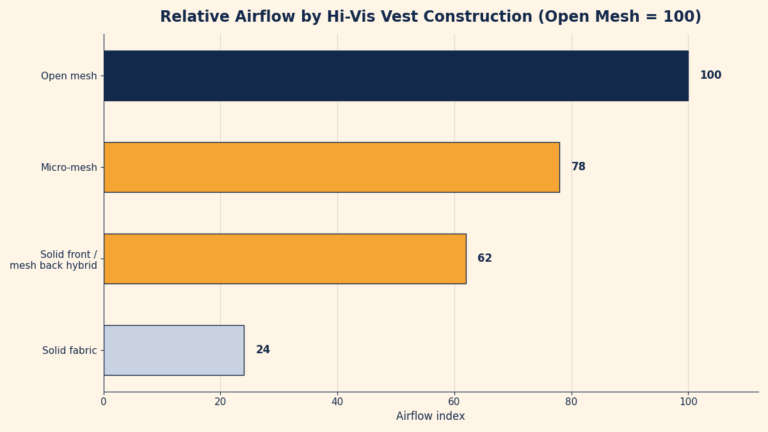
Fabric choice also shifts in winter. Mesh is a summer favorite because it breathes, but in cold weather many crews prefer solid fabric, which blocks a little wind and feels more substantial over a jacket. Neither changes the class on its own; the label and the construction set that.
Where should the logo go on winter hi vis vests so it stays readable at night?
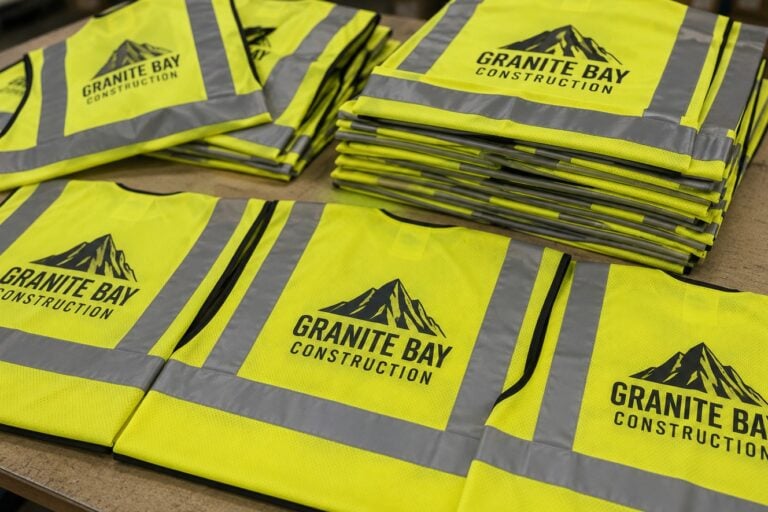
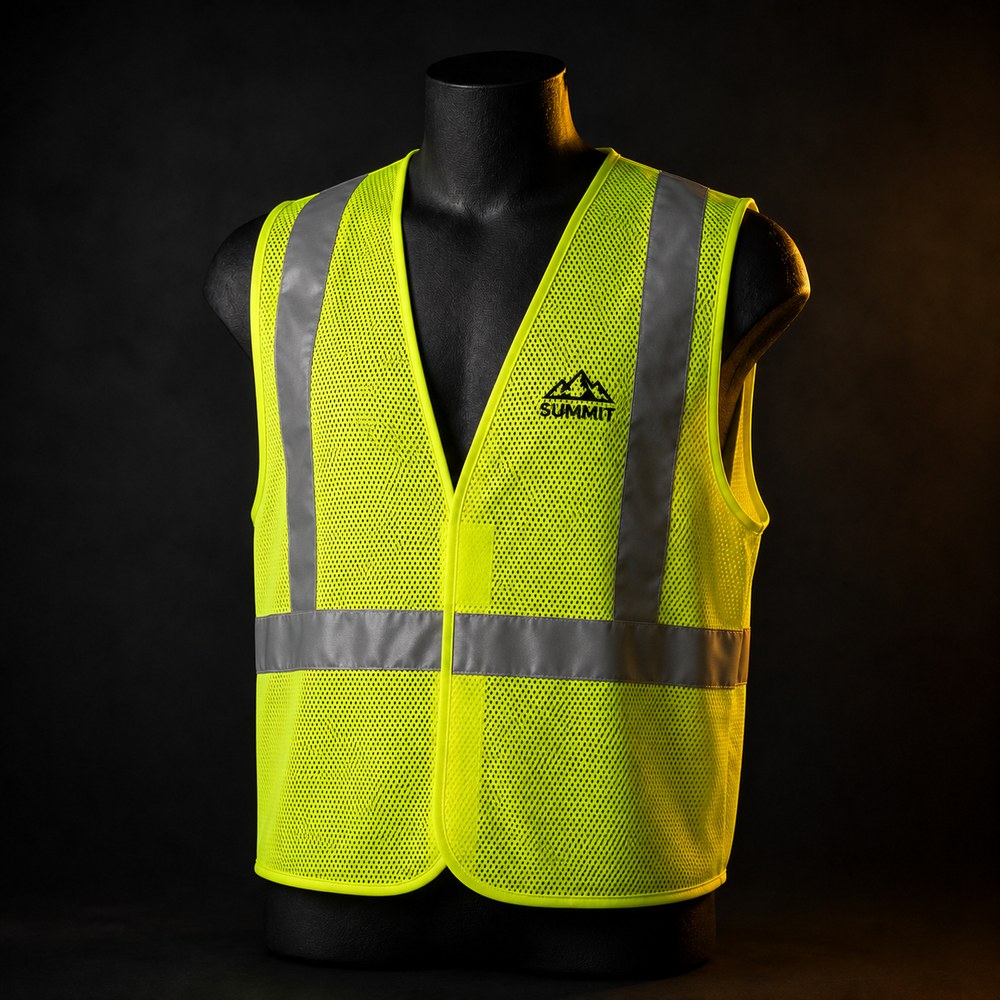
The logo on winter hi vis vests should sit in the background fabric, clear of the reflective bands, so the tape keeps its full width and the print stays readable under headlights. On most vests that means a left-chest mark on the front and a larger company name or role across the upper back, above or between the bands.
Night readability is where winter artwork differs from summer artwork. In daylight, a colorful logo reads fine on lime or orange fabric. At night, drivers see bright tape first and the printed area second, so bold shapes and short words do better than fine detail. A one-color version of the logo is often the clearest choice for the back.
Role text earns its place in winter. Words such as plow crew, parking, flagger or security help the public understand who is directing them in the dark. Custom Hi-Vis Vests can print different role text across one order while keeping the same company mark, and the free mockup shows exactly where each print lands relative to the tape before anything is produced. Unlimited free revisions mean you can adjust placement until it works, and you pay nothing until you approve the design.
When should you place a winter hi vis vests order?
The best time to place a winter hi vis vests order is before the clocks fall back, or as soon after as you can. Working backward is simple: allow about a day for the free mockup, time for your own review, and about 2 weeks of standard production after approval, plus shipping to your yard or sites.
- Confirm the class and roles. Decide which crews stay in Class 2 and which move to Class 3 for the dark months.
- Collect sizes in winter layers. Gather sizes from each crew while they wear cold-weather gear.
- Send artwork and request a quote. Share your logo, role text and quantities through the custom quote form. The minimum is 12 vests.
- Approve the mockup. Review the free mockup, ask for changes, then approve to start production.
- Hand out and keep spares. Issue vests before the first dark shifts and keep a few extras for seasonal hires and wet days.
If your first dark-season shift is already close, say so on the quote request. Faster turnaround is available with express shipping, and Custom Hi-Vis Vests will tell you plainly what is realistic for your date. The how it works page lays out each step from quote to delivery.
Frequently asked questions
Should winter crews move up to Class 3 hi vis vests when the days get shorter?
Hi vis vests in Class 3 make the most sense for winter crews who work near faster traffic during dark mornings and early sunsets. ANSI/ISEA 107 links the class to the hazard, and low light raises the risk. Many companies keep yard staff in Class 2 and move roadside roles up. Your safety plan, client or agency rules make the final call.
Does a dark coat underneath change how well a hi vis vest works?
A hi vis vest works over a dark coat as long as the vest stays the outermost layer and closes fully. The coat does not reduce the vest's visibility, but a hood, rain shell or scarf pulled over the vest can hide the reflective tape. Ask crews to size their vests over the jackets they actually wear so the bands stay straight and visible.
Do lime or orange hi vis vests stand out better against snow?
Hi vis vests in either lime or orange stand out against snow, but many crews find orange contrasts more strongly with white and gray winter backgrounds. Lime tends to read well at dusk and in mixed light. At night, reflective tape matters more than fabric color. Custom Hi-Vis Vests can show both colors on a mockup so you can compare them before ordering.
How does road salt and slush affect the reflective tape on hi vis vests?
Hi vis vests worn through a salty, slushy winter collect grime that dulls the reflective tape, so drivers see less shine in their headlights. Rinsing off salt, washing vests according to the care label and drying them flat keeps the tape working. Replace any vest whose tape has cracked, peeled or stopped reflecting, because a dull vest no longer protects the worker.
Should snow removal and plow support crews wear branded hi vis vests?
Hi vis vests with a company name are a smart choice for snow removal and plow support crews, who often work before dawn in parking lots and along roads. Branding tells property managers and drivers who the crew belongs to and why they are on site. Custom Hi-Vis Vests can add role text such as plow crew to the back while keeping the reflective bands clear.
Are custom hi vis vests worth it for holiday parking lot staff?
Custom hi vis vests are well worth it for holiday parking lot staff, because shopping traffic peaks after sunset when drivers are distracted and rushed. A clear role print such as parking or security on the back tells shoppers who is directing them. Branded vests also make temporary seasonal staff look like part of the property team instead of random people waving in the lane.
Should a winter hi vis vest order wait until the first snowfall?
A winter hi vis vests order should not wait for the first snowfall, because the dark season starts weeks earlier when the clocks fall back. Waiting puts production and shipping into the shortest days, when crews already need the vests. Ordering in the fall leaves time for the free mockup, your review and about 2 weeks of standard production before the busiest winter stretch.
Can early-shift workers get a different hi vis vest print from the day crew?
Early-shift workers can get hi vis vests with their own print in the same order as the day crew. Many companies keep one logo on the front and change the back text by shift or role, such as night crew or plow crew. Custom Hi-Vis Vests shows each version on the mockup, so you can confirm every print before production starts.
Do mesh hi vis vests make sense in cold weather?
Mesh hi vis vests still work in cold weather when they are worn over a warm jacket, but many winter crews prefer solid fabric. Solid vests block a little wind, feel sturdier over bulky layers and hold up to snow and slush. Mesh stays useful for crews who move between heated buildings and outdoor work. Fabric type alone does not set the ANSI class.
How should wet hi vis vests be dried after a snowy shift?
Wet hi vis vests should be hung or laid flat to dry at room temperature after a snowy shift, not left balled up in a truck cab. Trapped moisture breeds odor and can weaken the bond on reflective tape over time. Avoid direct high heat such as a heater vent, and follow the care label for washing so the vest stays bright all season.
Do towing and roadside crews need different hi vis vests in winter?
Hi vis vests for towing and roadside crews often need stronger coverage in winter, since cold-weather breakdowns and night calls put operators beside traffic in darkness. Many operators choose Class 3 for those calls and size the vests to fit over insulated gear. Custom Hi-Vis Vests can quote roadside crews in a separate class from shop staff within one order.
What should I tell Custom Hi-Vis Vests about winter conditions when asking for a quote?
Hi vis vests quote faster and fit better when the request explains the winter conditions your crew faces. Tell Custom Hi-Vis Vests whether people work near traffic in the dark, what jackets they wear underneath, which roles need different prints and when the first dark shift starts. Those details shape the class, style, sizes and timing recommended on your free mockup.
Get a free mockup for your hi vis vests
Send your logo or idea and the quantity you have in mind. Custom Hi-Vis Vests returns a free mockup within 24 hours, you approve the design before anything is produced, and standard turnaround is about two weeks with faster options available. Get a custom quote.